

The global textile and apparel industry is facing growing uncertainty due to changes in US tariff policies, geopolitical tensions and shifting trade relations. These developments are affecting international trade and creating fresh challenges for exporters. Geopolitical tensions and shipping disruptions are further increasing freight and insurance costs, delaying shipments and raising production expenses. Uncertainty in major markets may also weaken consumer demand and discourage buyers from placing large orders, making business planning more difficult. The United States is a ...
read more...
From humble beginnings in Kolkata to building a manufacturing business with an international presence, Amar Chhajer’s journey reflects a lifelong commitment to innovation, experimentation and perseverance. Over six decades in the packaging and...
read more...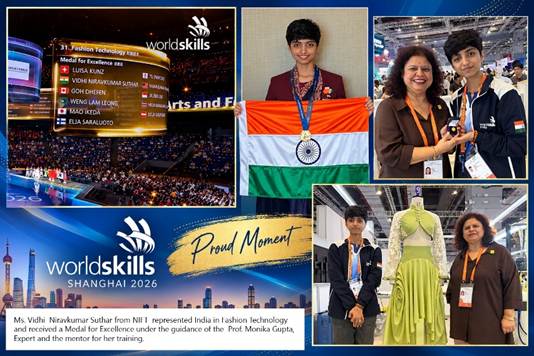
The National Institute of Fashion Technology (NIFT) has recorded a significant achievement at the 48th WorldSkills Competition, Shanghai 2026, with NIFT students and experts representing India across key fashion and creative skill areas, includi...
read more...
BTTF )and Première Vision SA, one of the world’s leading international platforms for creative fashion, textiles, and sourcing, signed a Memorandum of Understanding (MoU) on 2nd September, 2026 at the Premiere Vision (Paris) exhibition to esta...
read more...
Shri Giriraj Singh, Union Minister of Textiles, along with Sushri. Shobha Karandlaje, Union Minister of State for Micro, Small and Medium Enterprises and Labour and Employment, inaugurated the 77th Foundation Day program of the Central Silk Boar...
read more...







.png)
.png)